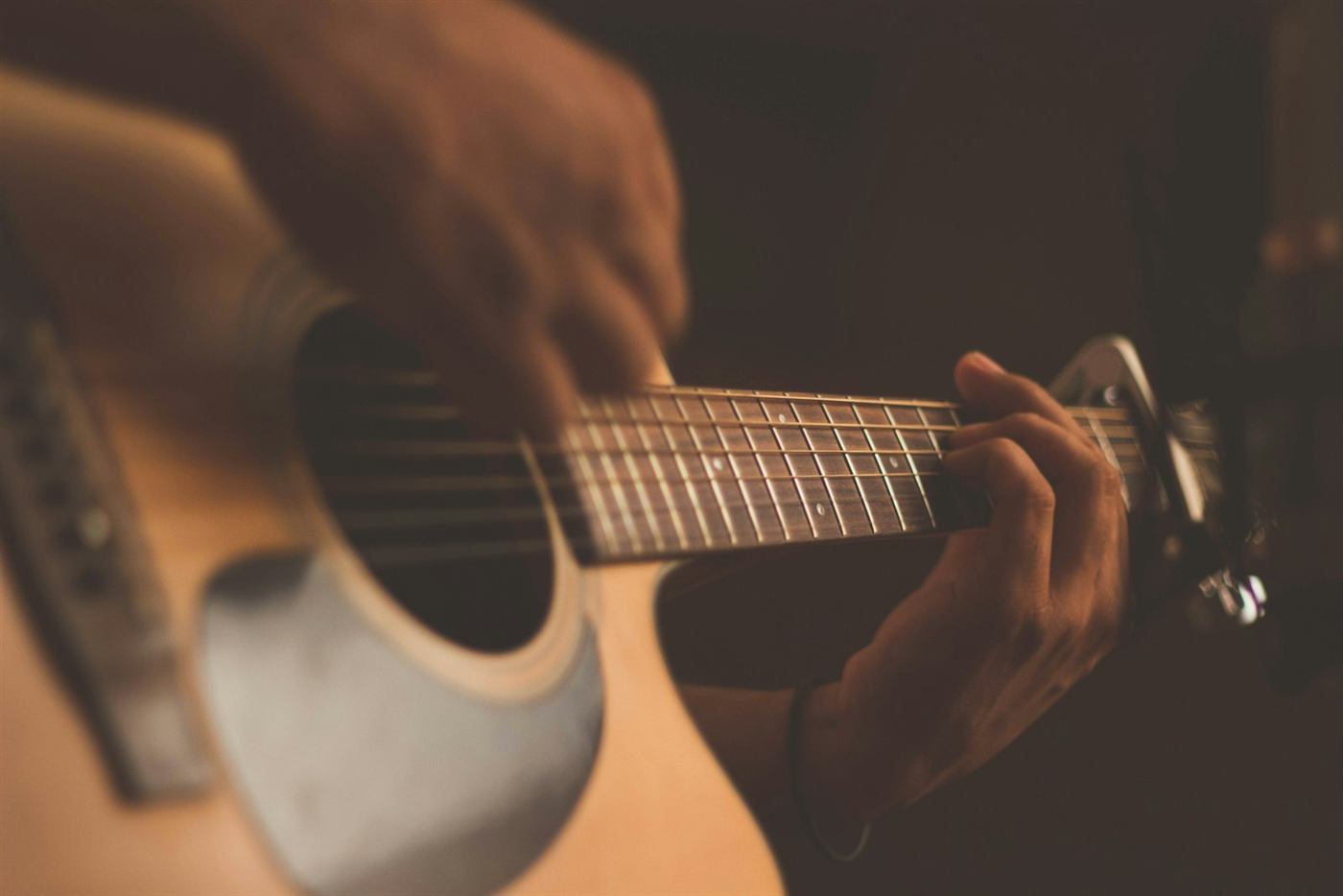
Make music on day one.
Open chords, pulse and a song you recognise. The early wins are real music, not exercises disguised as homework.
Acoustic / Electric / RockschoolGuitar classes for children and teens in Chennai and online. From the first clean chord to riffs, solos and full songs, with a teacher who listens to what your child wants to play.Children usually start around seven, once the hand can stretch across the neck. A three-quarter size guitar is fine to begin with.
Guitar repeats pitches across strings, which is why the neck can feel mysterious—and why it eventually becomes so expressive. Move the viewpoint to see how open chords, movable shapes, octave landmarks and upper-register melody connect.
Open position: ringing strings and compact chord shapes make it the natural home for accompaniment, timing and clean changes.
Open chords, pulse and a song you recognise. The early wins are real music, not exercises disguised as homework.
Intervals, movable shapes, scales and chord tones reveal how the fretboard connects—so you can stop memorising isolated boxes.
Acoustic fingerstyle, blues vocabulary, rock rhythm or electric lead. Technique follows the music you want to speak.
Rockschool Grades 1–8 offer clear milestones and internationally recognised certification without draining the joy from playing.
Beginners build relaxed fretting, pick or finger control, open chords and a dependable pulse. Riffs and short songs make every new movement audible and memorable.
FoundationPower chords, barre shapes, pentatonic vocabulary, seventh chords and alternate picking expand the map. Learners begin transposing and recognising progressions by ear.
DevelopingFingerstyle independence, bends, vibrato, muting, articulation and chord-tone soloing are studied through acoustic, rock, blues, pop and film repertoire.
FluencyAdvanced players refine tone, dynamics, improvisation and stage transitions while building a coherent programme. Rockschool Grades 1–8 can provide recognised milestones.
PerformanceGuitar lessons are currently available at all six Brooks Musicals studios in Chennai — Anna Nagar, Kattupakkam, Iyyapanthangal, Perumbakkam, OMR/Thalambur and Porur — as well as live online for students worldwide.
We begin by hearing a real piece or groove. The teacher identifies one high-value adjustment—left-hand pressure, pick path, rhythm placement, noise between changes—then turns it into a short, repeatable exercise.
That skill returns immediately to music. The learner plays a longer section, practises recovering without stopping and leaves with a recorded reference or clear written targets.
Yes. Complete beginners can start guitar without previous experience. Lessons begin with the fundamentals and gradually develop chords, rhythm, technique, reading and song playing at a suitable pace.
Students can begin guitar from around age seven, when they are generally ready to handle the instrument comfortably. The appropriate starting point also depends on the student's physical development, interest and readiness.
Yes. Guitar lessons are available for children, teens and adults. Adult beginners, returning players and more experienced students can start at a level that matches their current ability and goals.
Yes. Students who want a structured qualification pathway can work towards recognised Rockschool (RSL Awards) grades. The grade level and repertoire are selected according to the student's ability and musical goals.
Yes. Brooks Musicals offers live online guitar lessons for students worldwide. Online lessons can support beginners and progressing players with live feedback on technique, rhythm, chords, repertoire and playing.